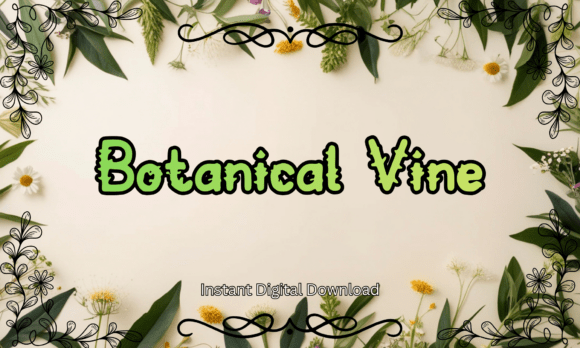
Botanical Vine Font for Creative Campaigns
It’s 9 a.m. on a Tuesday, and I’m staring at a blank canvas in Canva, trying to visualize the launch of a new line of organic skincare products. The client wants something that feels alive, fresh, and grounded in nature. I’ve tried several fonts—clean sans serifs, bold modern typefaces—but none seem to capture the essence of what we’re selling. Then it hits me: Botanical Vine.
Botanical Vine for Instagram Content Series and Social Media Graphics
Botanical Vine is a playful leafy display font that brings an organic feel to any design. As a marketing specialist, I often find myself working with social media content that needs to stand out in a crowded feed. Botanical Vine has become my go-to choice for Instagram posts, especially when creating a series around seasonal wellness or eco-friendly living.
The font’s flowing lines and natural curves make it ideal for headlines that need to feel approachable yet stylish. Whether it’s a post about morning routines or a tip on sustainable living, Botanical Vine adds a visual rhythm that aligns with the brand’s voice. It works best as a headline or callout, drawing attention without overwhelming the viewer.
When designing for mobile screens, I always check how Botanical Vine looks in small previews. Its legibility holds up well, even at smaller sizes, which is crucial for thumbnails and story cards. I pair it with a clean sans serif for body text to balance the organic style with readability.
Botanical Vine for YouTube Thumbnails and Reels Covers
Creating YouTube thumbnails can be a challenge—especially when you want to convey a message quickly. Botanical Vine has been a game-changer for my video thumbnails. It gives the visuals a natural, handcrafted look that resonates with viewers looking for authentic content.
For a recent video on DIY plant care, I used Botanical Vine for the title overlay. The font’s soft edges and leafy details complemented the greenery in the background, making the thumbnail feel cohesive and intentional. It also helped the text stand out against dark or busy backgrounds, which is essential for fast-scrolling feeds.
I’ve found that Botanical Vine works best for short, impactful phrases. It’s not ideal for long paragraphs, but as a display font, it excels at grabbing attention and reinforcing the theme of the content. Pairing it with a bold sans serif for secondary text helps maintain visual hierarchy without clashing.
Botanical Vine for Web Design and Email Banners
When designing a landing page for a new product launch, I wanted a font that felt both professional and inviting. Botanical Vine fit perfectly as a header font for the hero section. Its organic shape gave the page a fresh, welcoming vibe that aligned with the brand’s identity.
In email marketing, Botanical Vine has proven useful for subject lines and banners. It adds a touch of creativity without being too flashy. For a recent campaign promoting a seasonal sale, I used it for the main headline in the email header. The font’s personality helped set the tone for the entire message, making it feel more personal and engaging.
One thing I always check before using Botanical Vine in web design is its performance on different screen sizes. It scales well, and the font’s ligatures and alternates add subtle visual interest that enhances the overall design without distracting the reader.
Botanical Vine for Branding and Packaging Design
Branding is all about consistency, and Botanical Vine has become a key part of our visual language. When launching a new line of biodegradable packaging, I chose this font for the logo and tagline. Its leafy aesthetic reinforced the brand’s commitment to sustainability while maintaining a modern, polished look.
Botanical Vine also works well in packaging design, especially for labels and product tags. It gives a handcrafted feel that appeals to eco-conscious consumers. I’ve used it for both short labels and longer product descriptions, always ensuring it pairs well with a complementary font for body text.
Before finalizing the design, I review the font’s file formats and licensing terms. Botanical Vine comes in multiple weights and styles, which makes it versatile for different branding applications. Its multilingual support is a bonus, especially when working with international audiences.
Botanical Vine for Promotional Content and Digital Ads
When preparing a digital ad for a local farmers’ market, I needed a font that felt authentic and approachable. Botanical Vine was the perfect choice for the headline. Its playful yet refined style made the ad feel more inviting, encouraging users to engage with the content.
For a recent Facebook ad promoting a wellness retreat, I used Botanical Vine in the headline and call-to-action button. The font’s organic shape added a sense of movement and energy that matched the campaign’s messaging. It also helped the ad stand out among other static images, increasing visibility and click-through rates.
One of the biggest advantages of Botanical Vine is its versatility. It works well in both high-contrast and low-contrast scenarios, making it suitable for a wide range of ad formats. I always test it on different backgrounds and lighting conditions to ensure it remains readable and effective.